
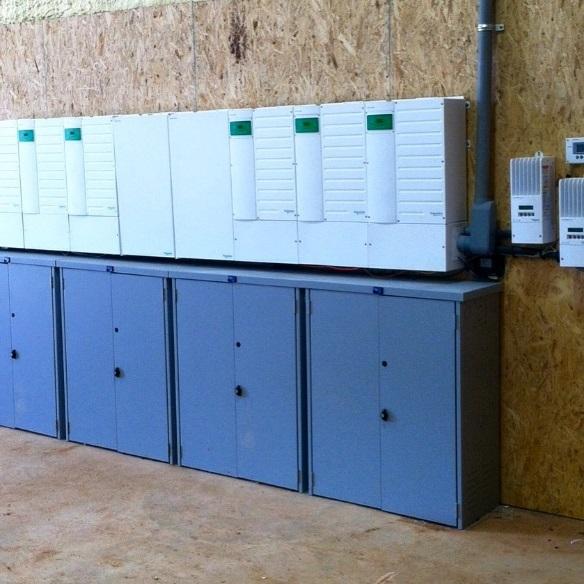
Consumers are using solar-powered battery storage at a much faster pace to look after their own needs and future electric pricing. This trend may very well result in a reduction in electricity prices for nearly all consumers and finally, give some competition for the utilities.
According to Giles Parkinson, this is the scenario being painted to the utility industry by global consulting firm PwC, which says the sector is about to go an unprecedented and rapid transition as dramatic as that which affected other industries.
Electricity utilities, it says, are about to face their “Kodak moment,” and the key is the emergence of rooftop solar and its ability to provide a cheap source of electricity, as well other “enabling” technologies such as solar power battery storage and smart software.
Mark Coughlin, the power utility leader for PwC, will fundamentally change the nature of the relationship between utility and the consumer. It will effectively shift the power from the utility to the customer, be they households or businesses, and will challenge the very “right to survive” of the traditional utility.
“This traditional utility model where the company controls the ‘electrons’ and the consumer has little choice is on its last legs – this model is struggling to meet customer needs,” Coughlin says.
“Once a household or a business has a solar panel on the roof or some other power source, they are no longer a passive consumer.”
He says that customers are now emerging as competitors to the utilities. “In as little as the next five years, consumers will exert unprecedented control over energy supply, usage, service standards, and costs,” Coughlin told the Energy Networks Association conference last week.
Hence the emergence of rooftop solar, which is already cheaper than socket-power because it has no delivery costs, is starting to challenge some fossil fuel generation, such as rising gas costs, on generation price.
Coupled with the emergence of battery and other storage technologies, smart meters, and other software that allows energy to be stored and delivered at a lower cost on a smaller network is challenging the industry’s traditional business model.
“Smart grids, smart meters, and customer energy management ‘gadgets’ are only the beginning of what is possible,” PwC says in a new report, Utility of the Future. Already we can control our home electronics and entertainment via our smartphones and tablets – why not our energy usage on a minute-by-minute basis?”
Coughlin says that these technologies – and new financing structures – will open the door to a flood of new entrants to the industry. Whether they are telephone companies, technology providers, financiers and systems managers, and existing utilities will also rush to form new alliances and joint ventures.
In data, this will include the likes of Google and Apple. In finance, it will range from huge investors such as Warren Buffett and Macquarie Group. But PwC says it will also come from local sources. “We expect to see small crowd-funded energy companies emerge in Australia within the next three years,” it predicts.
“Customer energy contracts will greatly favor the customer – suppliers will have little choice in the matter!” the PwC report says, noting that changes to the way services are offered are likely to occur within three years.
“This will mark a major, transformational shift for both the utility sector and customers. “And it will drive benefits to consumers. “In some cases, this will see customers paying more for the certainty of supply. In other cases, we see the distinct possibility that costs will reduce for customers.”
PwC predicts that the retail market will turn into a “channel fight” focused on costs and choice. The retail sector could be subsumed into other large-scale “retail engines” such as data providers and telephone companies and different in-house service providers. And there is likely to be a big turf war with the network distributor companies over who owns those assets.
“The key will be who has ownership and operational control of distributed generation assets – these will be the swing factor in who can provide the most innovative services for customers.”
Generators will struggle because of the combined impact of falling demand and rival energy sources, such as rooftop solar. In Europe, nearly $500 billion has been wiped from the value of utility assets – primarily generators – due to the impact of new technologies.
“Contracting for long-term demand will become increasingly difficult as time passes given viable alternative sources of supply will almost certainly become available within ten years,” PwC writes.
Profit From the Power of Solar
Receive a Free Consultation. Contact us and start saving today.